Hollywood admits piracy not the problem
Ars Technica reported last week on a Hollywood Exec's admission that DRM, for them, is not about piracy, rather about control over the way people interact with copyrighted works.
If we believe Ronald Grover's sources in his BusinessWeek article of last week, the problem is liberal DRM and not piracy, and this is a startling admission. According to him, an unnamed studio executive said that a major reason why studios weren't jumping on board with the iTunes store and other similar services is that their DRM is too lax. "[Apple's] user rules just scare the heck out of us." It's not piracy that's the concern, it's their ability to control how you use the content you purchase.

 Last night, I and three other DefectiveByDesign members from Seattle met up for a dinner and a beer and then headed over to the launch of the Zune at the War Room on Capital Hill. This being a Microsoft town, I expected a huge crowd, even if it was just Microsofties. We were surprised by the turnout, maybe 150 people waiting in a line snaking around the corner for the doors to open. Almost all were MS people, but we talked to them none the less. The responses were interesting ranging from disgust with out message, to bemusement to outright support.
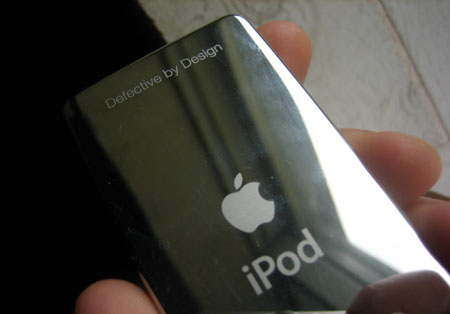 DBD Member Jeremy Clark recently got a new iPod, (

 We are starting to hear more and more doubts expressed that DRM can be a viable business model for the media and technology companies. The "stay the course" voices sound shaky. The problem? It seems that we - their users and customers - don't like DRM, and we won't accept it. We refuse to purchase from them, some circumvent the restrictions and most just go elsewhere.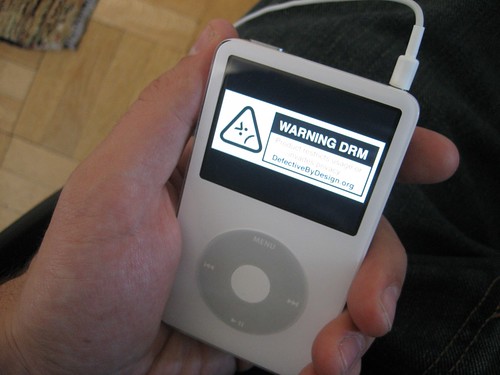

 "If consumers even know there's a DRM, what it is, and how it works, we've already failed" - Disney Executive.